

Since 2008
Control and mixing rooms
Discuss bass unevenness, reflections, speaker and listener positions, room dimensions, and available treatment space.
Room acoustics design for recording studios
Studio design starts with the room: its dimensions, how it will be used, what you hear today, and what you need it to do. Acoustic Fields offers remote room analysis and design guidance for professional, home, and garage recording studios.
Remote design is available worldwide. Installation is available in the United States only.
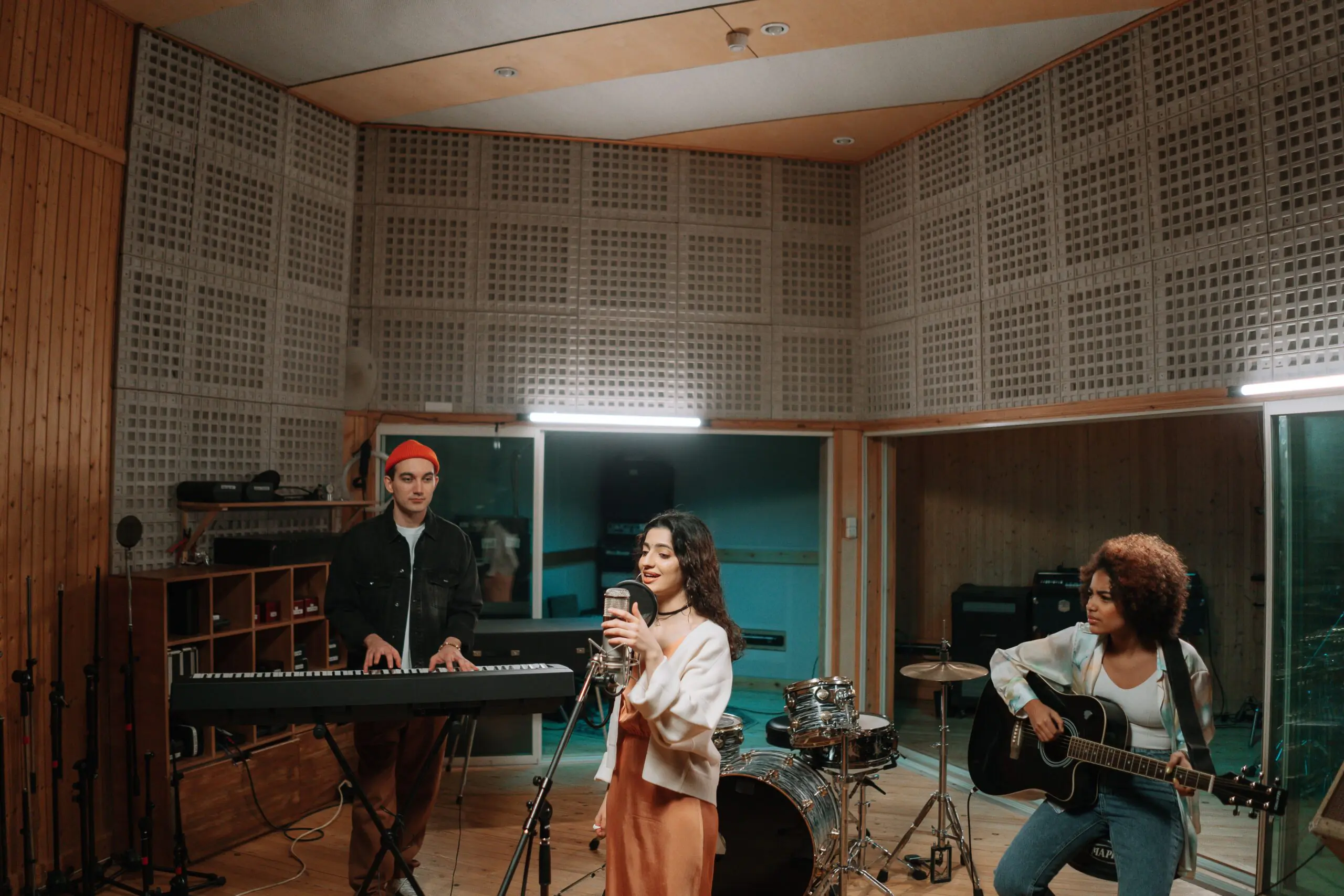
A room can sound boomy in the bass, uneven from one listening position to another, or distracting because of reflections. In a small room, low-frequency pressure can build unevenly, so moving a microphone, instrument, or listening position may change what you hear. Buying panels before identifying the problem can leave the main issue untouched.
Acoustic Fields begins with the room and your goals. Share photos and room information through the Room Analysis form; Dennis Foley reviews the details and discusses the situation with you. The conversation is intended to help you understand the problem and consider design or product recommendations that fit the room.
Acoustic treatment changes how sound behaves inside a room. It can help manage low-frequency buildup and reflections so recorded or monitored sound is more useful. Sound isolation concerns sound traveling through walls, ceilings, floors, doors, windows, and other paths between spaces. The right approach depends on the noise source, building, and result you need.
Adding absorbers inside a room does not, by itself, soundproof the room. Construction intended to reduce sound transmission does not automatically make a room sound balanced for recording or mixing. A studio may need treatment, isolation planning, or both. The Room Analysis can help sort out the problem before you invest.

Low-frequency sound interacts with room dimensions and boundaries. This can create uneven bass at different positions: one spot may sound heavy while another seems weak. Room width, height, length, listening position, and intended use are useful starting information for a design conversation.
Acoustic Fields’ approach is to consider low-frequency behavior before moving on to mid- and high-frequency reflections, rather than treating every visible surface as the same problem.
Discuss bass unevenness, reflections, speaker and listener positions, room dimensions, and available treatment space.
Explain the instruments, voices, microphones, and recording style so the room’s role guides the design discussion.
Describe microphone position, room noise, reflections, and sound-leakage concerns. A booth still needs a plan based on size and use.
Existing rooms and converted garages often have fixed dimensions and practical limits. Photos, measurements, budget, and use help establish what can be addressed remotely. For more on bass and reflection control in small rooms, see our guide to home recording studio acoustics.
DIY installation of acoustic treatment can fit when you are comfortable following a room-specific plan and installing the recommended treatment. If your goal is to reduce sound traveling between spaces, discuss whether the room needs isolation construction before deciding what work to do yourself. A design conversation can help when you are unsure what the room needs, have tried products without solving the problem, or need to balance sound goals against space and budget.
Acoustic Fields sells products and provides room-design guidance. The stated process is to discuss the room with Dennis and identify suitable recommendations, rather than choose from a generic online shopping list. Product shipping varies by destination and should be confirmed before ordering.
For a new build, discuss room dimensions and acoustic goals early. For an existing studio, describe what cannot change, such as the footprint, adjacent rooms, or available treatment depth. For a discussion of construction choices and design priorities, see room design decisions.


Dennis Foley is Acoustic Fields’ Chief Acoustics Engineer and the creator of the company’s acoustic foam. He is self-taught and has worked in acoustics since 2006. His work focuses on helping clients understand room sound, including low-frequency behavior and mid- and high-frequency reflections, then consider solutions for their room and goals.
Read more about Dennis and Acoustic Fields · Dennis Foley on LinkedIn
Yes. Remote design is available worldwide. Share photos and room information so Dennis can discuss the space and its goals.
Installation is available in the United States only. Remote design is available worldwide. Confirm installation and product shipping for your location.
Not necessarily. Bass problems depend on low-frequency sound and the room, while many common panels primarily address other frequency ranges. Identify the problem and product performance before choosing treatment.
Have your room dimensions and intended use ready. Be ready to discuss your main sound concern, budget, and space constraints with Dennis.
Yes. The Room Analysis is the primary free consultation offer. Use the form to share room information and photos and arrange a conversation.
Share room photos, dimensions, studio goals, and your main sound concern. Start with a free Room Analysis and discuss the next step with Dennis.

I am an acoustic engineer with over 30 years’ experience in the business. My technology has been used in Electric Lady Land Studios, Sony Music of New York, Cello Music and Films founded by Mark Levinson, and Saltmines Studios in Mesa, Arizona, along with hundreds of others.
© 2025 Acoustic Fields